
More About Us
Explore
Visit Us
Hughson Historical Museum
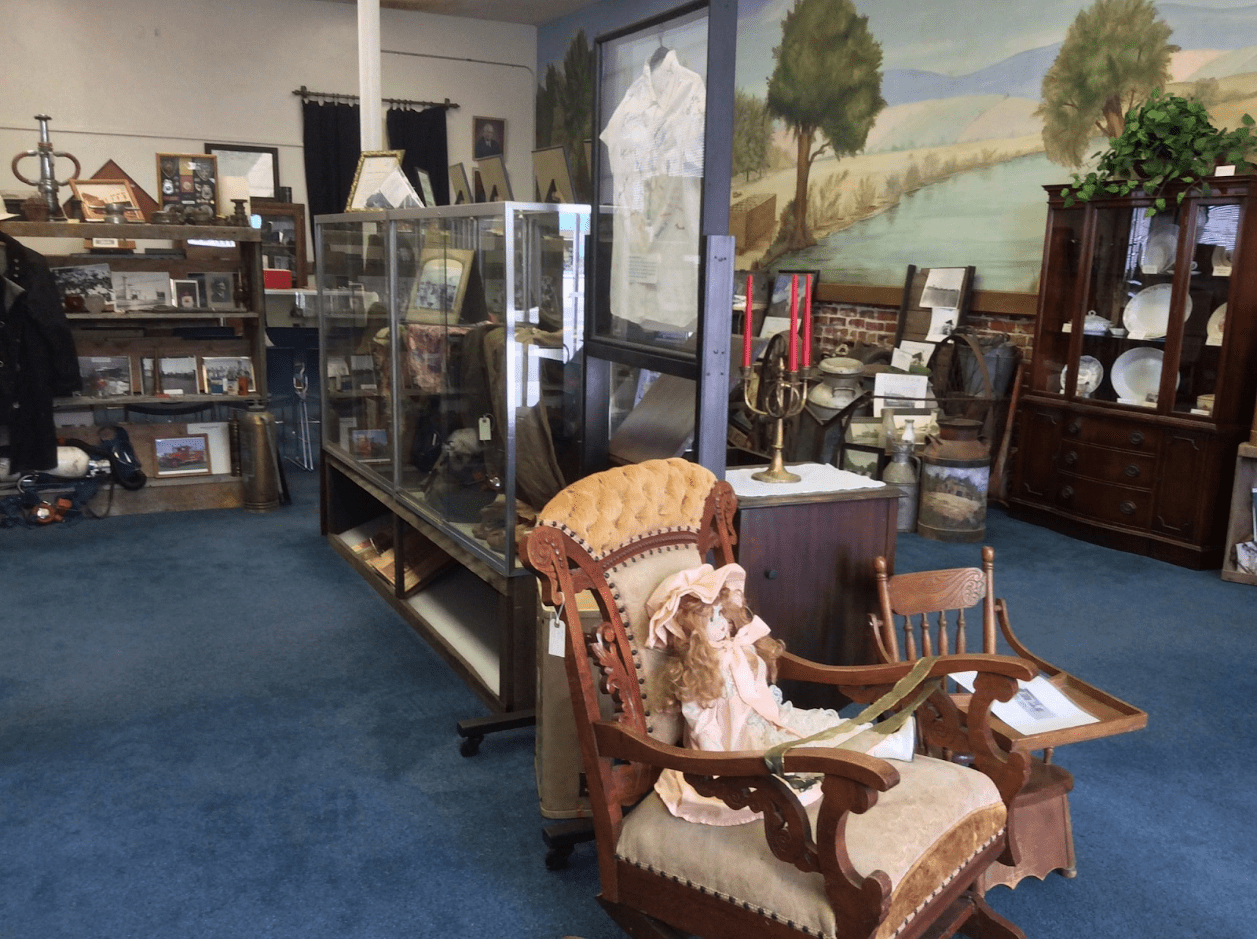
The Hughson Historical Museum, located in the historic, original Bank of Hughson building in downtown Hughson, features exhibits on the city’s history, including the early settlement of the area, the development of the local agricultural industry, and the growth of the community over the years. The museum houses a collection of antique farm equipment, vintage clothing and other artifacts that offer a glimpse of the past and into the daily lives of the people who lived in this area.
Our Origins
Hughson History
The place that became known as Hughson was first settled by two brothers, James and Will Hudelson, and their sister, Sarah Browder, in 1851. They bought land and eventually owned 2,500 acres on the south bank of the Tuolumne River. Between 1876 and 1900 they sold small parcels of their land and a community of farmers gradually came into being.
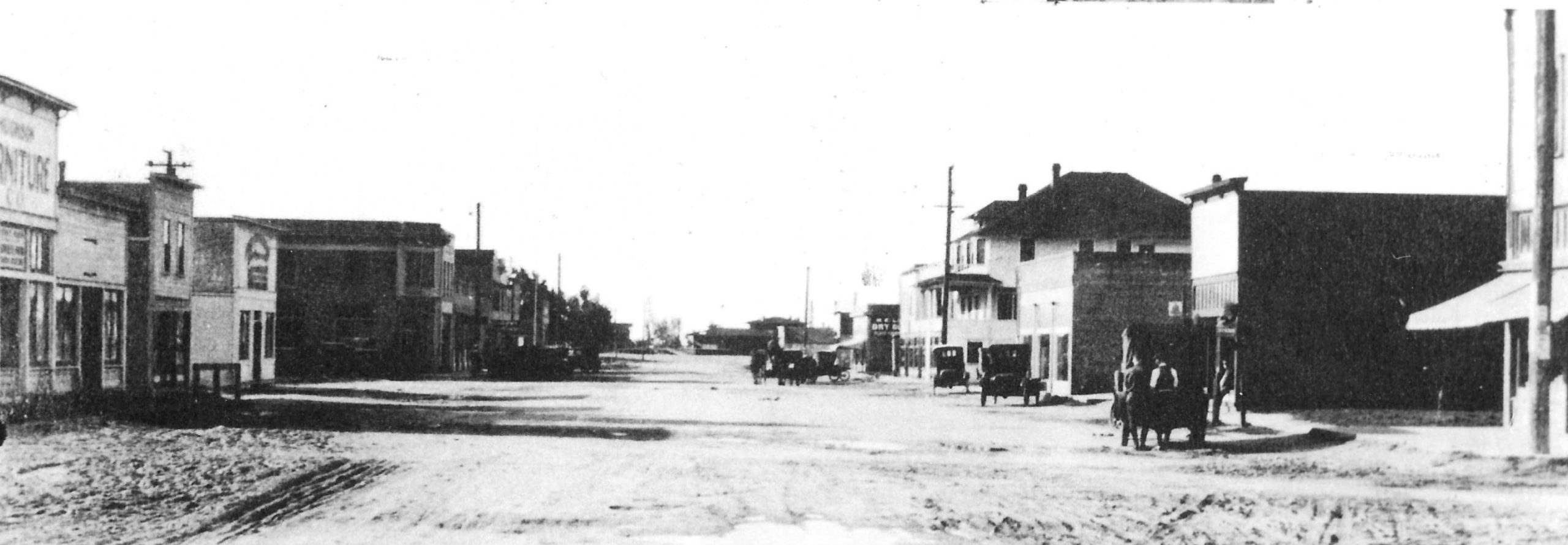
The San Francisco & San Joaquin Railway came to the area in 1896, and named its station the Hughson Stop after Hiram Hughson, who gave the company a 100-foot wide right-of-way through his acreage, plus a plot of land for a depot. In 1907, the township of Hughson was established by C.W. Minnear and Charles Flack with the intent to sell home sites. Upon advice from Hughson, they laid out the town grid with extra wide streets so that a huge wagon, pulled by a four-horse hitch, could make a U-turn when necessary. Almost immediately, Flack arranged to have the Gillette Hotel moved from the town of Ceres to Hughson in two sections. It was the event of the day, as local ranch families turned out to watch 26 mules and two steam engines pull the massive hotel sections on logs, inching along the road for the better part of a month.
Emigrants from other sections of California soon were arriving on the train to choose land in this rich agricultural area. Businesses, schools and churches developed to service the growing populations, including a post office, barbershop, train depot, bank, livery stable, garages and later a condensed milk plant.
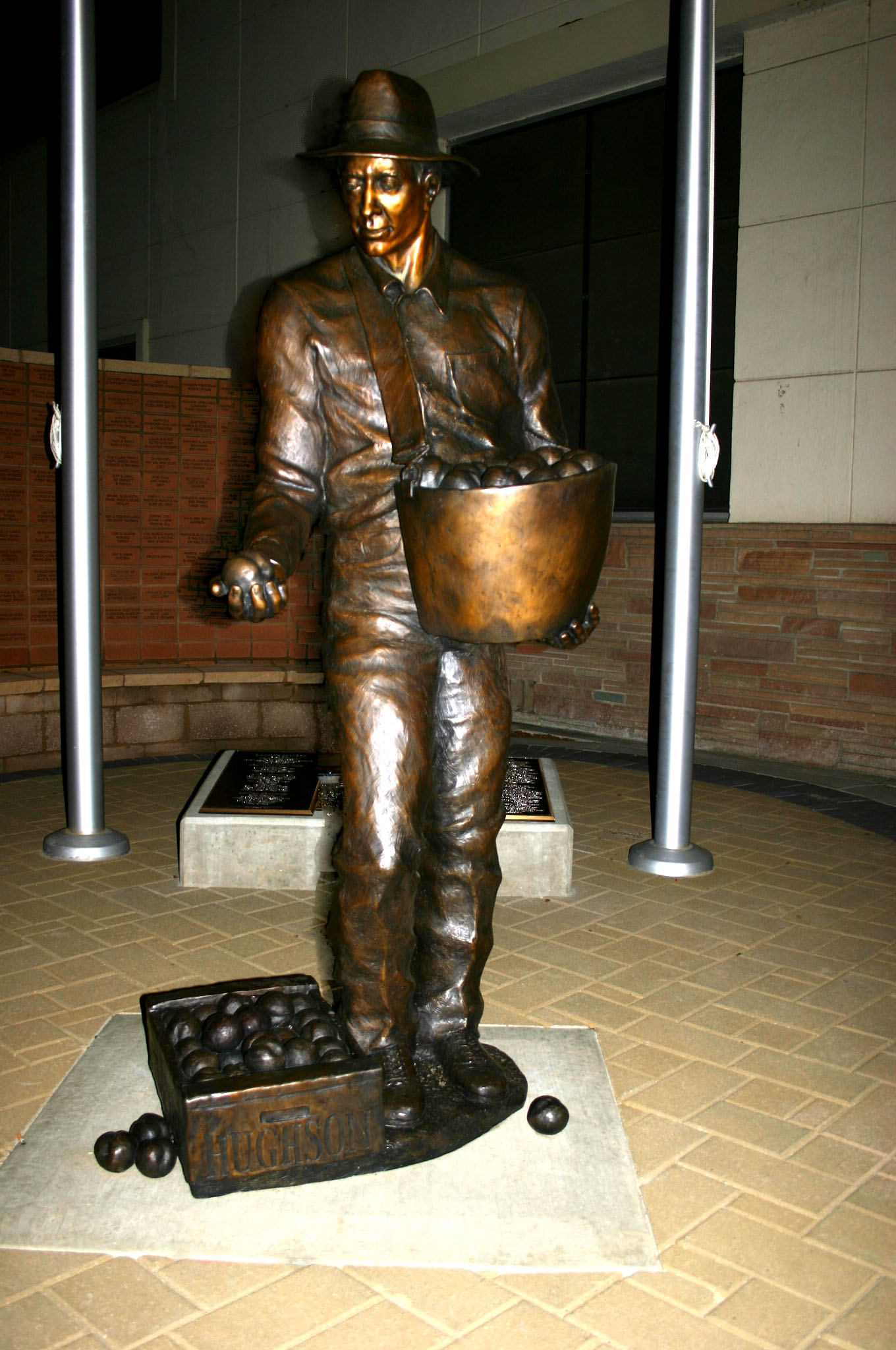
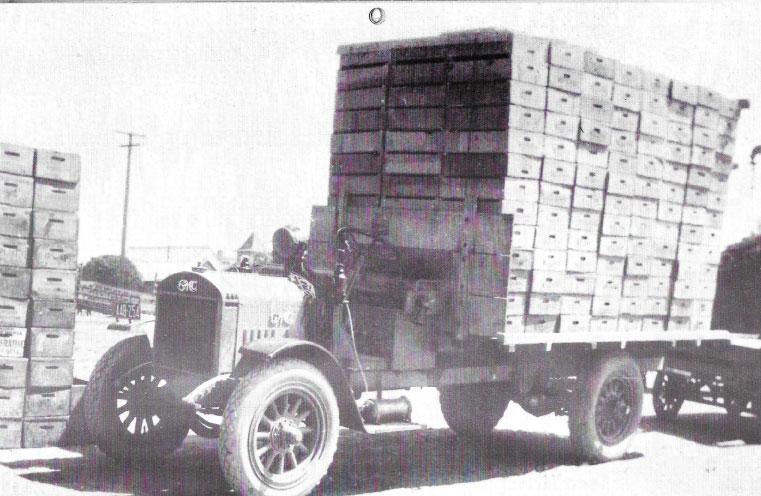
Initially grain was the primary commodity grown in the area at the turn of the century, but with the La Grange Dam built in 1894 and the Don Pedro Dam in 1923 and the irrigation canals throughout the county, farmers expanded into alfalfa, cattle, fruits and vegetables. Mostly peaches were planted around 1920 and it quickly became the preferred commodity, with options for fresh market sales, hauled to the Pratt-Low cannery in Modesto or the Hume cannery in Turlock, or dried on drying flats. At one time Hughson was known as “The Peach Capital of the World”, with the world’s largest receiving docks located along the Santa Fe railroad.
The streets of Hughson were oiled in 1935, courtesy of a train wreck. Oil spilled from the overturned tank cars was salvaged for the project.
Hughson became a city in 1972, the newest city in Stanislaus County.
Our Namesake
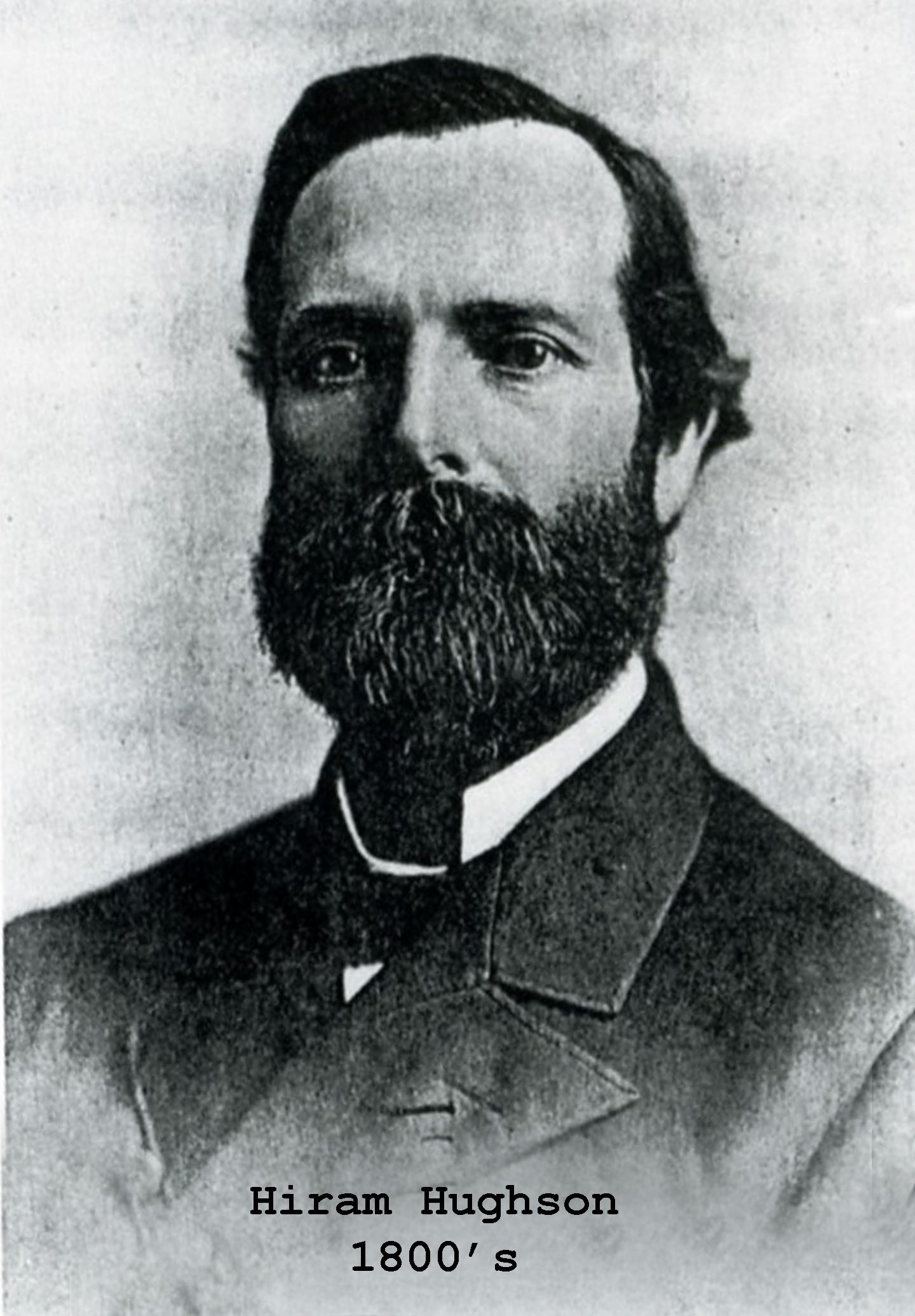
Hiram Hughson
In 1857, at the age of 17 and with 75 cents in his pocket, Hiram Hughson relocated from New York to San Francisco via the Panama Canal to seek his fortune. Over the following years, he gained experience in various occupations, including clerking, mining, ranch work, supplying beef to miners, cattle raising, transporting freight between Sacramento and Virginia City, as well as raising grain on a rented farm near Stockton.
In 1882, he bought 1,000 acres east of Modesto, and through subsequent land purchases, expanded his holdings to nearly 7,000 acres dedicated to grain cultivation. During this period, he lost his right arm in a mowing accident, yet he stated that his loss made him use his head instead of his strength, leading him to great financial success.
Hughson married Luella Avery, 16 years old, in 1864. The couple reared 10 children at the two-story Victorian family home located at 3424 Tully Road until 1901, when Hughson retired at the age of 61 and moved his family to Modesto.
In 1896, when the San Joaquin-Santa Fe Railroad came through the area, Hiram Hughson gave the railroad a 100 foot wide right-of-way through his land and deeded them a small plot for a depot. A sign was put up at the depot that read “Hughson,” so the train engineer would know to stop for the grain shipments, and the depot became known as the “Hughson Stop.”
In 1907, Hughson sold 2,080 acres to Charles L. Flack and C.W. Minnear, who established the Hughson Town Company. Hughson did not want to spend the money needed to convert his land to irrigation, so he sold his land to developers. Flack and Minnear laid out the street grid to sell plots for the new town of Hughson.
When he passed in 1911, Hughson’s reported worth was one million dollars, and was regarded as one of the richest men in the San Joaquin Valley. Widowed Luella bought property in Modesto for $10,000 and built the 6 story Hughson Hotel, the largest hostelry and building in town which attracted high society guests. Luella lived to age 102 and was a highly respected community leader in Modesto.
Clubs and Organizations
Woman’s Improvement Club (WIC)
The Woman’s Improvement Club (WIC) of Hughson was formally organized in 1909, following the formation of “The Board of Trade” by the men of the area. The growth of the town of Hughson and its vicinity is described as inseparable from the activities of the club women. The fundamental purpose of the WIC was the “improvement, mentally, morally, socially, and physically, of the town and vicinity”. The club’s activities began almost immediately, often tackling basic infrastructure and environmental needs. Since the Hughson area was practically without trees, less than a month after its organization, the Club women began planting them. This was strenuous labor, as there was no irrigation, requiring water to be hauled and applied by hand to keep the trees alive. By 1913, more trees were planted, and the women continued trimming, staking, and cultivating. Early activities also included raising funds for town needs, such as contributing money to help buy fire hose, painting street signs and hiring labor for their placement, and providing benches for outdoor gatherings. The WIC also worked determinedly to carry out their projects, especially attempting to build a clubhouse for a community center, funding these goals through dinners, plays, concerts, bazaars, food sales, ice cream socials, and parties.
The scope of the Woman’s Improvement Club’s work quickly expanded beyond immediate infrastructure to encompass education, welfare, and broader civic reform. They provided valiant service in working for school bonds for both high and elementary schools. They beautified school grounds, bought playground equipment, and planted a park on the high school grounds, which was later named the “Carrie Schrader Park” after the late Mrs. Schrader, under whose leadership the trees had been planted. The club assisted in starting school cafeterias, organized a Parent Teacher Association (PTA), and held the first baby clinic. The WIC demonstrated a sustained commitment to youth welfare, sponsoring Girl Scouts, contributing to the Boy Scouts, and loaning money to students to help them complete their university courses. In 1945, the Club focused increased attention on the needs of the community’s youth, supporting the campaign for a Youth Center, especially a swimming pool. After the pool was secured, the Club contributed $500 from its saved clubhouse fund toward purchasing the Del Ray Theatre to be used as a Community Auditorium.
Beyond Hughson, the WIC became “federation minded” in 1916, joining the County, District, and State Federations, and later the General Federation in 1924. This allowed them to pursue large-scale philanthropic and civic projects, such as paying quotas for the state endowment fund, scholarship funds, and the $800,000 Redwood Grove. The Club was instrumental in securing the Narcotic Hospital at Spadra, the Tehachapi Home for women prisoners, and aiding in the clean-up of the State Home for the Blind. Furthermore, the women worked for the establishment of juvenile courts and separate wards for children and maternity cases. The Club also supported the Nurse Scholarship Fund, helping two young women from Hughson secure their nursing training, and participated in the UNICEF program to aid needy children in other parts of the world. Domestically, they maintained a long-term interest in the welfare of the Navajo Indians, to which they regularly contributed.